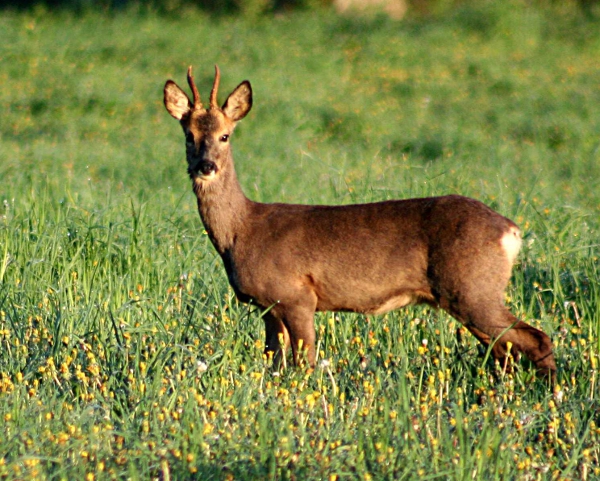
 In the UK, there are no longer any natural predators to keep deer populations under control and in good health.
Our wild deer are therefore managed by selective culling with high velocity rifles.
This culling is carried out by experienced marksmen known as ‘stalkers’.
I am fortunate enough to be married to a very experienced stalker, and have had the pleasure of accompanying and filming hundreds of ‘stalks’ over the last thirty years.
Deer stalking is an increasingly popular pastime in the UK.
Standards of marksmenship and conduct are extremely high, and our deer population is for the most part very well looked after.
Judicious culling by stalkers ensures that populations remain healthy and that commercial woodland and forestry is protected from the ravages of an excessive deer population.
An important part of our economy
Keen stalkers are willing to pay significant sums of money for assisted stalking.[wp_ad_camp_1]Stalkers from other countries are also willing to come to the UK.
They pay for the privilege of being able to stalk our deer.
Stalking not only keeps deer populations healthy, it is an important part of our rural economy.
Why do people want to kill deer?
The appeal of stalking lies in the fieldcraft skills required to get close enough to the animal to take a clean shot. And in the pleasure of providing fresh meat free from preservatives and antibiotics.
There is also pleasure in knowing that the animal you are going to eat has never known the fear of confinement, transportation or the abbatoir, and has had a good life.
Deerstalking is quite challenging. Deer have excellent senses, including a keen sense of smell and and will depart in haste at the slightest hint of a suspicious sound, scent, or movement.
Stalking is generally carried out at first and last light when deer are most active, and the stalker needs to be skilled at tracking his quarry and at remaining unobserved.
An excellent source of food
Deer stalking is not just about hunting and shooting deer, it is also about proper carcass preparation, and the provision of an supremely healthy source of meat.
The first steps towards putting the venison into the food chain takes place in the field. Venison is an excellent source of healthy food and the muscle meat and liver from the culled deer is all destined for human consumption. In our case, nothing is wasted as we feed the remaining organs to our gundogs.
The stalker is responsible for ‘gralloching’ (removing the internal organs) and for initial checks on the health (and therefore fitness for human consumption) of the animal concerned.
Getting started
To participate in deer stalking you will need to first become a competent shot with a high velocity rifle. The only way to kill a deer humanely is by accurate placement of the bullet in a small and specific target area. If you cannot do this on an artificial target, you cannot be allowed to try your luck on an animal.
You can book rifle shooting lessons at a number of locations throughout the UK or you may be lucky enough to have an experienced mentor who will teach you to handle and shoot a rifle safely and effectively, and then supervise you through the entire learning process of becoming a deer stalker.
Legal requirements and principle
There are very specific legal requirements as to the purchase and use of a deer rifle. There are also specific legal requirements as to the seasons, times and manner in which deer may be shot. Different calibres of rifle are appropriate for different species and the stalker must not only be familiar with these, but also with the correct area for bullet placement in order to ensure an instant kill and prevent spoiling of the meat.
The most up to date regulations on requirements, and best practice can be found on the British Association for Shooting and Conservation website. BASC also run training courses for would be deer stalkers leading to an approved certificate in deer stalking and carcass preparation
Dogs for deer
The vast majority of deer shot by an experienced marksmen are killed instantly, but because a deer is not ‘aware’ that it has been mortally wounded, in some cases it will run a considerable distance before collapsing. This can happen even when a deer is shot cleanly through the heart.
If this ‘death run’ takes place in woodland or deep vegetation, a trained dog is indispensible in locating the animal.
HPR breeds are quite popular with deer stalkers, and so are the short legged Teckels (a working bred wire-haired dachshund). However any gundog can be trained to track deer. We use Labradors, and there is no reason why your faithful Labrador shouldn’t make just as good a job of it as any other breed. If you enjoy other types of shooting he will also be a lot more useful to you generally than a Teckel.
Training and working a dog on deer can greatly increase the pleasure of deer stalking and an experienced dog will often indicate the presence of deer before the stalker has sighted them.
Here is some information about deer stalking courses laid on by BASC and here at the British Deer Society whose website has additional useful information.
If you enjoy my articles, you might like my new book: The Happy Puppy Handbook